

Running Vest for Hydration and Long Runs . STRYQ Running Vests
The STRYQ design is built for runners who need more than a phone and key but do not want a bulky backpack. It keeps fluid, fuel and everyday essentials close to the body, with an adjustable fit that helps the load move with you rather than against you in motion.

More about the vest
The one-size adjustable construction uses front and side adjustment to create a close feel across different body shapes and layers. Six storage areas give you practical places for a phone, keys, nutrition, a 500ml bottle and extra kit, while the rear section gives you room to carry more when distance or conditions demand it. Reflective detailing adds another useful element for early starts and darker sessions.
For a 5K you may not need this much storage at all. For marathon training, longer road sessions, trail routes or days when reliable water stops are limited, the extra carrying space begins to make sense. The guide below explains how to choose, fit and use the STRYQ system without turning a simple piece of kit into unnecessary bulk.
More about the Running Vest collection
The STRYQ running vests are designed for runners who need a secure, comfortable way to carry hydration and essentials without restriction. Built for performance, this lightweight running vest sits close to the body for a stable, bounce-free fit on every run.
Our running vests are built for longer distances, giving you easy access to hydration, nutrition and storage while keeping everything secure and balanced. Whether you are training, racing or running trails, a running vest helps you stay focused without distraction.
Perfect for long runs, marathons and endurance training, the STRYQ running vests offer a breathable, adjustable fit that moves naturally with your body. Pair your running vest with a running belt for extra storage, running socks for comfort, or a running soft flask to keep hydration close on longer runs. Explore our full running gear range to complete your setup.
STRYQ LONG RUN STORAGE
Why Choose the STRYQ Running Vest?
A good vest should make carrying more feel easier, not make the run feel more complicated. Once a session becomes long enough that you need fluid, nutrition, a mobile, keys and perhaps an extra layer, ordinary clothing can run out of useful storage quickly. Putting everything in one large carry-all is not the answer either. The useful middle ground is a close-fitting system that spreads smaller items around the torso and keeps the load stable as your pace changes.
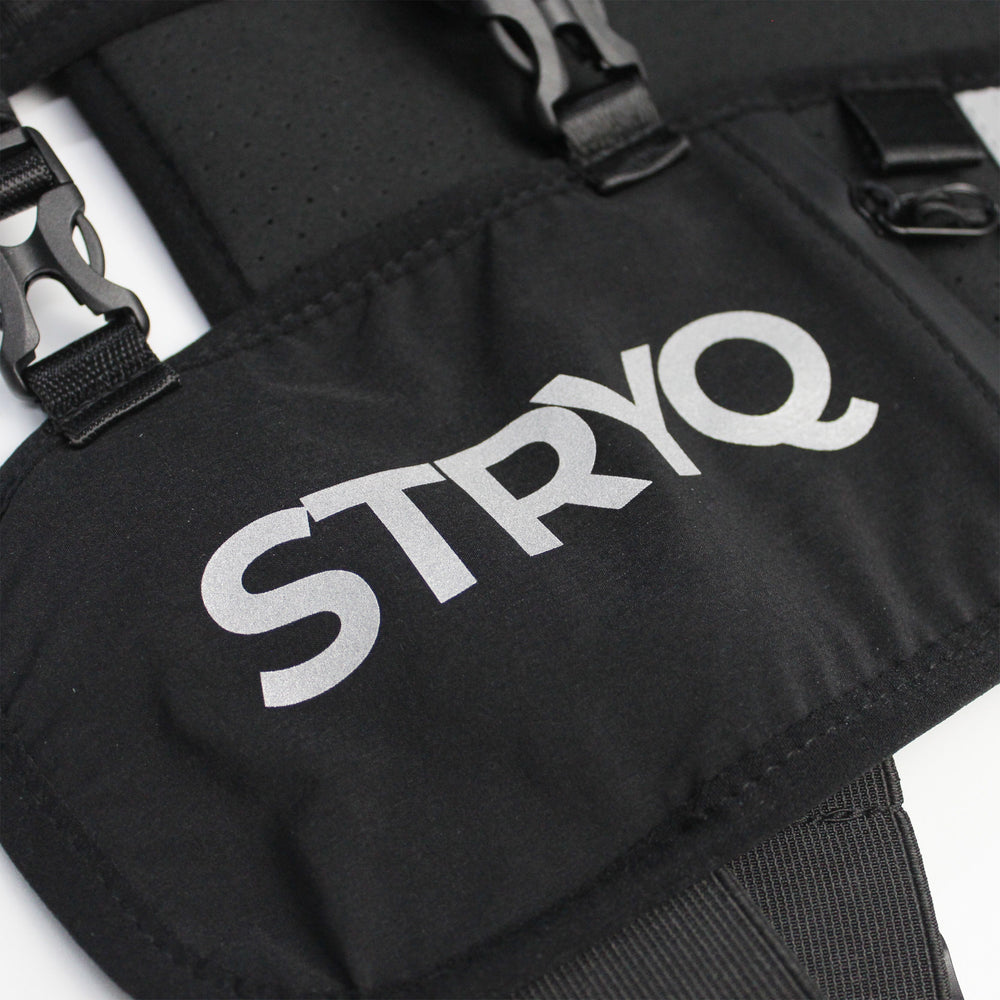
Adjustable close fit
Front and side adjustment helps the design stay secure across different body shapes and training layers.
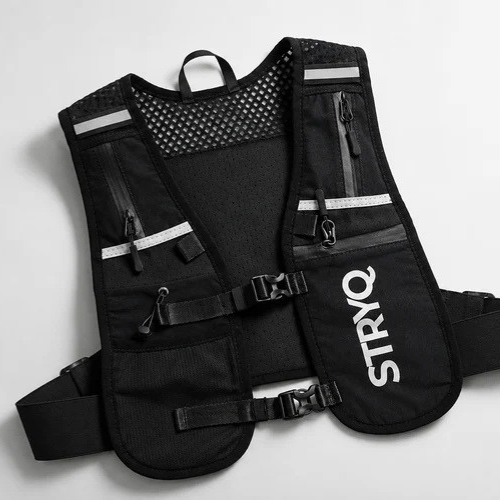
Six Practical Storage Areas
Six practical storage areasSeparate phone, key, bottle, mesh and rear storage makes everyday kit easier to organise.
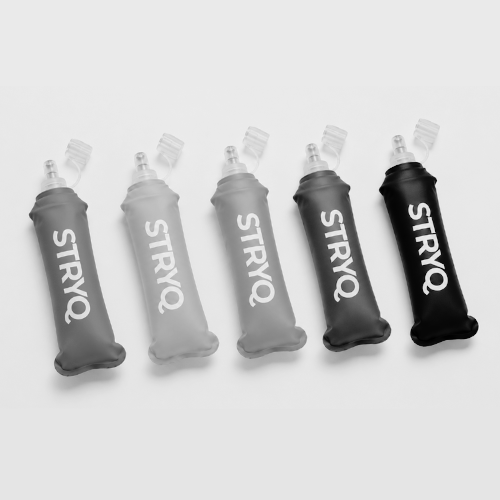
Fluid ready from the start
A 500ml bottle comes with the product, with rear space for an additional reservoir when you need more for longer routes.
SIXstorage areas
500MLsoft flask included
HI-VISdetailing for visibility
ONE SIZEadjustable fit
RUNNING VEST REVIEWS
Real Runners. Real Miles.
Runners use STRYQ kit for fit, fluid access and secure storage on long runs.
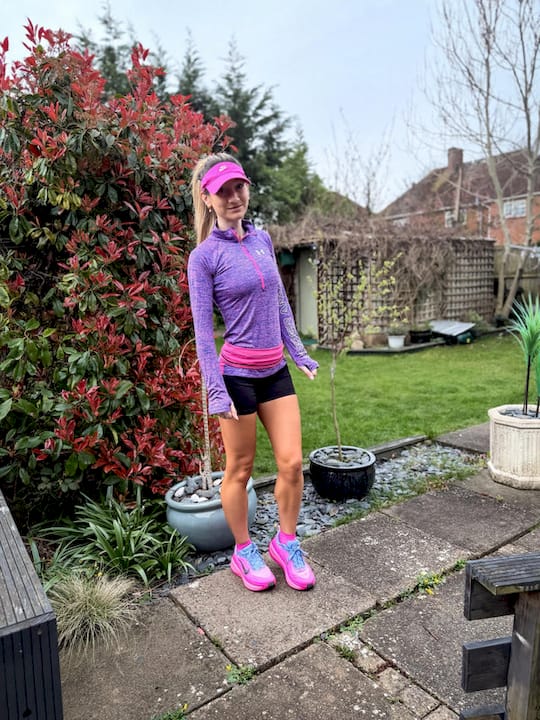
Adjustable Fit That Stays Secure
“I’m a beginner runner with a bigger bust and this hydration vest fits perfectly thanks to the adjustable straps. It doesn’t bounce, feels secure, and the bottle is easy to reach. Excellent quality and value.”
Margaret F · Customer review
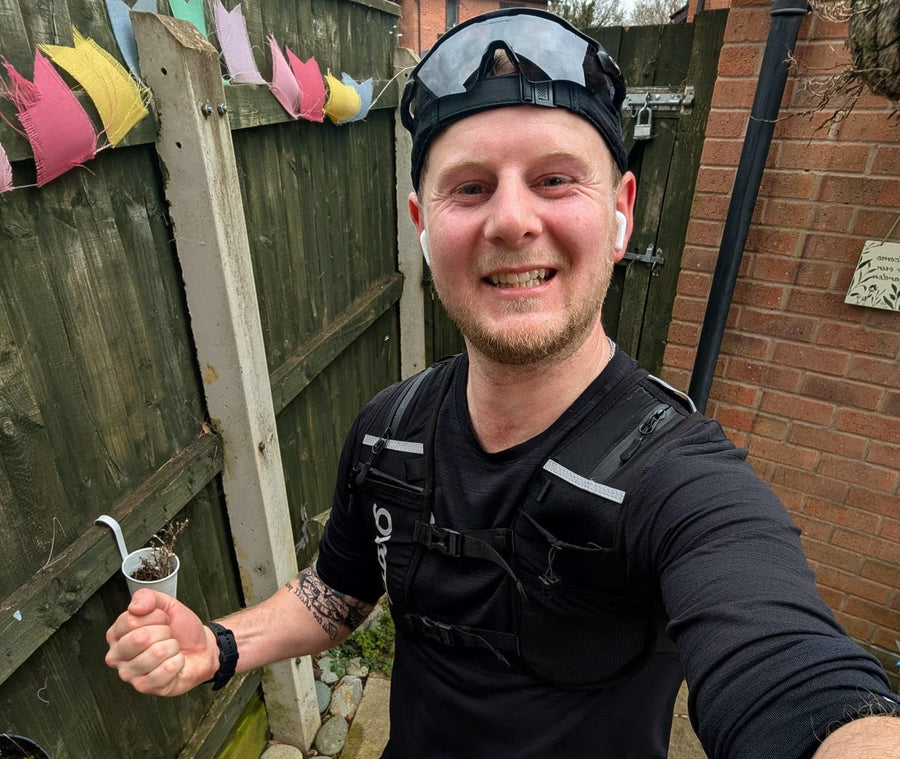
Ready for Long Runs and Race Days
“Absolutely love this hydration vest. Great quality and really well made. The adjustable straps make it easy to get the right fit and the included bottle is perfect for long runs and race days.”
Michael A · Customer review

Lightweight Storage Without the Bulk
“Really impressed with the STRYQ Running Vest. It fits comfortably, holds the water bottle securely, and has space for keys and phone. Lightweight, breathable, and great value compared to bigger brands.”
KATHY M · Customer review
FLUID. STORAGE. NO UNNECESSARY BULK.
Carry more without turning your run into a backpack session. Adjust the fit with the vest loaded, keep the items you use most within easy reach and let the rear storage handle the things you only need occasionally.
RUNNING GUIDE FOR VESTS
Everything You Need to Know.
WHY STRYQWhy the STRYQ design works for longer runs
Why the STRYQ design works for longer runs
The STRYQ design uses an adjustable front-and-side fit rather than relying on a single fixed size. That lets you bring the material closer to the body once the storage is loaded, while still leaving enough room to breathe deeply and move your arms naturally. The 88% nylon and 12% spandex construction gives the fabric stretch and structure without the rigid feel of conventional backpacks. For everyday training, the goal is simple: less swing, less bulk and fewer reasons to keep readjusting your kit.
Storage is split across six practical areas. There are two zipped shoulder pockets, with a key hook in one, a zipped phone pocket, a front holder for the supplied 500ml bottle, a mesh pocket beneath it and a large rear area for nutrition or a light layer. That layout matters because a balanced load feels very different from one heavy item hanging from a single point. You can keep frequently used items at the front and move less urgent kit towards the back.
The reflective strips and STRYQ logo are useful for visibility, but they should sit alongside sensible lighting and visible clothing rather than replace them. On wet or darker UK mornings, keeping reflective areas uncovered gives approaching traffic and other path users a better chance of noticing movement. After a wet session, empty the pockets and let the fabric air dry before storing it.
The product is designed for runners who want one adaptable option across road, trail and marathon training. If you want the live specifications, reviews and current availability, view the STRYQ product page. If you are still deciding whether this amount of kit is justified for your normal training, our guide on whether carrying hydration is worth it explains when carrying more genuinely helps and when it is unnecessary.
GUIDE 02Choosing by distance, route and load
Choosing by distance, route and load
The best vests are not automatically the ones with the largest capacity. Start with what your normal route actually requires. If you run a familiar 30-minute loop with water waiting at home, carrying extra weight achieves very little. Once your sessions extend beyond an hour, move away from reliable refill points or include long stretches of trail, having fluid and nutrition close becomes much more useful.
Distance is only part of the decision. A cool road run with shops and fountains nearby may need less kit than a shorter exposed route in warm weather. Trail terrain can also increase what you carry because weather changes, navigation, food and safety accessories become more relevant. Capacity should therefore match the conditions rather than an arbitrary mileage number.
For lighter sessions, compare this system with the STRYQ belt collection. A belt is simpler when the load is mostly a phone, keys and a few gels. Once you add a meaningful amount of fluid, spare clothing or more nutrition, distributing that weight across the upper body usually feels more controlled. Our vest vs belt guide goes through that decision in more detail.
Think about heat as well. Any upper-body carrier covers more of your torso than a belt, so there is a point where extra space has to justify the added coverage. On a short summer session you may prefer less material. On a long unsupported route, easy access to fluid can matter more.
There is also no reason to choose separate systems purely because one page is labelled for women or men. The STRYQ design is unisex and adjustable. What matters is how the straps sit around your torso, whether the front remains stable when loaded and whether the edges stay clear of areas that rub. If you want more fit-specific context, see our guides to men's lightweight vest guide and lightweight options for women.
For runners wondering whether this is too much equipment for a shorter event, our 10K carrying guide explains where a small carrying system can still make sense. The important distinction is need. This setup can be useful at 10K in heat or on self-supported routes, but it should not become compulsory kit simply because longer-distance runners wear one.
Practical rule: load the exact fluid, phone, fuel and layers you plan to carry, then jog, turn and take a few deeper breaths. Judge the setup when it is full, not when the fabric is empty and almost weightless.
GUIDE 03How to fit a run vest securely without bounce
How to fit a run vest securely without bounce
Fit starts with the load. Put the bottle, mobile and normal essentials in place before tightening anything because a loaded carrier sits differently from an empty one. Start with the side adjustment, then bring the front straps in gradually until the material sits close across the torso. You should be able to breathe fully without the straps digging into your ribs or pulling the front panels together aggressively.
A secure fit is not the same as maximum tension. If the fit feels restrictive while standing still, it will usually feel worse once your breathing rate rises. The correct setup stays close when you jog in place and turn your body, but it should not compress the chest. Use small adjustments on each side rather than making one strap much tighter than the other.
Then check the load itself. A heavy phone placed away from the body can create movement even when the straps are correct. Keep denser items close and use the front storage for things you need regularly. A bottle should sit firmly enough that it does not lift out of its holder, while the rear section should not be stuffed into a rounded lump that pulls the vest backwards.
Clothing changes the fit. A thin summer top, a winter base layer and a lightweight shell all add different thickness around the torso. Recheck the adjustment when seasons change rather than assuming one setup will work permanently. If you prefer the system over several tops in winter, leave enough range to loosen it without making the summer fit sloppy.
Chafing is often a warning that something is moving. Common areas are around the neck, under the arms and beneath strap edges. If irritation begins, first check that the carrier is not sitting too low and that the load is balanced. Tightening harder is not always the fix. Sometimes moving one item, smoothing a layer or changing the strap position removes the friction immediately.
Use a short test session before a long event. Then repeat the test at a faster pace and on a small downhill section if that reflects your normal training. Our fit guide gives a more detailed adjustment sequence if you want to fine-tune the setup.
- Load it first: adjust the system with the same fluid and kit you expect to carry.
- Keep it snug, not restrictive: you should still be able to take a full breath comfortably.
- Balance the weight: keep dense items close to the torso and avoid loading one side heavily.
- Recheck over different layers: winter layers can change how the same adjustment feels.
GUIDE 04Hydration, soft flasks and fuel
Hydration, soft flasks and fuel
A hydration vest becomes useful when drinking needs to happen without repeated stops during longer sessions. The STRYQ setup comes with a 500ml water bottle at the front, giving you a simple starting point for longer road sessions and trail routes. If your preferred setup uses collapsible bottles, the front storage can keep fluid close and easy to reach while your hands remain free.
Soft flasks have a practical advantage over rigid bottles because they become smaller as you drink. Less empty space means less sloshing, and an empty bottle takes up very little room. For longer training, some runners carry water in one and electrolytes in another. Others use one front option and rely on planned refill points. The right running hydration setup depends on temperature, route access, pace and how much you personally sweat.
Do not carry extra fluid simply because you have space. Every 500ml adds roughly half a kilogram before the container itself, so unnecessary water quickly changes the weight of the pack. A cooler session with frequent refill points may need very little. A hot exposed route or remote trail can demand much more. Plan what you need before leaving rather than filling every available space by default.
For runners who prefer flexible bottles, see the STRYQ soft flasks collection. Our 500ml collapsible bottle guide explains filling, drinking and cleaning, while the guide on using soft flasks for marathon running covers how to practise access before race day.
The rear area also gives you the option to add a bladder when you need more fluid than front storage can comfortably provide. A rear reservoir can increase capacity for remote routes, but it also puts more load across the back and makes it harder to see how much remains. Test the full setup before relying on it far from home.
Nutrition should be organised separately from fluid. Keep the first gels where you can reach them without stopping and place later fuel in another pocket or the rear section. If you use different flavours or caffeinated options, create a simple order you can remember when tired. Our marathon race-day accessories guide is useful when you are deciding what actually deserves space on event day.
GUIDE 05Pockets, capacity and pack organisation
Pockets, capacity and pack organisation
Extra storage only helps when you can find what you need. The STRYQ design uses separate pockets rather than one open compartment, so give each item a repeatable place. Put the phone in the zipped phone area, attach keys to the internal hook, keep early nutrition near the front and use the large rear space for a layer or items you do not expect to reach often.
Phone access is personal. Some runners want the screen close for maps, music or safety, while others prefer to put it away completely. A zipped pocket keeps the device more controlled than a loose compartment. If you are comparing different carrying methods, our guide on how runners carry their phone compares belts, vests, clothing storage and armbands.
Capacity should grow only when your route requires it. A light layer, gloves or compact safety accessories can fit comfortably for long days, but an overloaded pack will always feel more noticeable. If the rear section is stretched hard or the front is difficult to close, reduce what you are carrying before trying to solve the problem with more strap tension.
Think about access order. Items you may need quickly should not sit underneath clothing at the bottom of the rear storage. Keys can stay attached and out of the way. Nutrition can be split between front and side areas. A small first-aid item, folded cash or emergency card can sit somewhere secure that does not need constant access.
A conventional backpack or larger off-road carrier can hold much more, but more space can encourage unnecessary kit. Running-specific packs are useful when mandatory equipment, bulky layers or very high fluid volume are part of the route. For most everyday long runs, a compact vest is easier to keep balanced because it limits the load to what is genuinely useful.
Care matters too. Empty every compartment after training, especially if wrappers, salt tablets or damp kit have been inside. Rinse bottle components promptly after sugary drinks and let the vest air dry away from direct heat.
| Run or load | Typical kit | Best STRYQ option | Why |
|---|---|---|---|
| Short local run | Phone, key, one gel | Running belt | Minimal coverage when you only need the basics. |
| Long road session | Fluid, phone, fuel, small extras | Vest | Spreads the load across the torso and keeps fuel accessible. |
| Marathon build | Flasks, nutrition, phone and light layer | Vest or belt depending on aid access | Choose according to how much fluid you actually need to carry. |
| Remote trail day | More fluid, nutrition, clothing and safety kit | Vest | Higher capacity and better distribution than ordinary backpacks. |
GUIDE 06Race vests, trail running and changing conditions
Race vests, trail running and changing conditions
A vest becomes most valuable when your route is less predictable. Trail running can take you away from easy water access, shelter and shops, so carrying a little more is often sensible. That does not mean filling every space. Start with the route, weather forecast and event requirements, then add only the items that solve a real problem.
For races, check organiser rules before deciding what to carry. Some events require specific kit, while large road races may provide frequent water stations and make a full vest unnecessary. If you are training for the same event, rehearse the final setup during longer sessions so you know where every item sits and how the vest feels when tired.
Race vests are often chosen for quick access as much as storage. Nutrition at the front is easier to reach than food buried in rear storage, and front fluid lets you drink without removing the pack. If you are carrying a phone for navigation or safety, use a secure zipped area and keep the screen away from hard objects that could scratch it.
Weather can shift the calculation quickly. A cool morning may become warm after an hour, leaving you with a layer to store. Wind or rain can create the opposite problem. Having enough capacity for one compact layer gives you flexibility without carrying a full change of clothing. On exposed routes, protection from the cold should come from appropriate layers and route planning rather than expecting the vest itself to provide insulation.
Reflective detailing helps in low light, but active lighting is still the better choice on genuinely dark paths. Keep reflective sections visible over your tops where possible and clean off mud or road spray after use. If you are building a wider long-run setup, STRYQ running socks can support foot comfort while the system handles fluid and storage.
For a broader decision framework, our guide on when a vest becomes useful looks at distance and terrain, while the best hydration options for runners compares handheld bottles, belts and vests. Use those guides to match the equipment to the session rather than assuming one system is right for every run.
- Use the vest when distance, heat or route isolation makes extra fluid and storage worthwhile.
- Check event rules before relying on any pack for mandatory race equipment.
- Keep frequently used fuel and flasks at the front and less urgent items towards the rear.
- Test the complete setup on training runs before using it for a marathon or remote trail event.
Fit guideDial in the straps and load so the vest stays close without restricting your breathing.
Vest or belt?Compare coverage, storage and fluid needs before choosing the larger carrying system.
Add collapsible flasksChoose collapsible 500ml options for easy front access and less movement as you drink.
Frequently asked questions
Do you really need a vest?
Not for every session. It becomes useful when you need more fluid, fuel or kit than pockets or a belt can carry comfortably. For short local runs with easy water access, a simpler setup may be better.
Why do runners wear vests?
They spread fluid and kit across the upper body, keep hands free and make nutrition easier to reach. A close fit can also reduce the swing you get from a loose carrier or backpack.
Is a vest too much for a 5K?
Often, yes. For a cool 5K close to home, most runners need very little. It can still make sense in heat, on an isolated route or when you need to carry specific medical or safety items.
What is the best running vest in the UK?
The best option is the one that fits securely when loaded and matches the storage room you genuinely need. STRYQ focuses on an adjustable close fit, six storage areas and practical fluid access without the bulk of larger packs.
Does the STRYQ system come with a bottle?
Yes. A 500ml bottle is included with the product and sits in the front holder for easy access. You can also use compatible soft options if that is your preferred setup.
Can I use collapsible flasks with it?
Yes. Soft flasks are a useful choice because they compress as you drink and reduce empty space. Check that your chosen size sits securely before relying on it during a long run.
Can I add a rear reservoir?
There is rear space for extra fluid when you need it. Load and test it before a remote route because the additional load changes how the system sits and how the straps need to be adjusted.
Will it hold my phone and keys?
Yes. There is a zipped phone area and a key hook inside one of the shoulder storage sections. Keeping hard keys away from the phone screen also helps prevent scratches.
How should the STRYQ design fit?
It should sit high and close without restricting a full breath. Adjust it with the normal load already inside, balance heavier items and make small strap changes until the system moves with your torso rather than separately from it.
Can I use it for marathon and trail training?
Yes. It suits long road sessions, marathon preparation and trail routes when you need extra fluid, nutrition or layers. Practise with the full setup before event day so access and fit already feel familiar.
RUNNING KIT FOR VESTS
Ready for Your Next Long Run?
Set the system up for the session you actually have planned. Load your fluid and fuel first, adjust the front and side straps, then use the remaining storage only for kit that earns its place.
STRYQ products are designed and tested by UK runners. Product details and availability can change, so use the live product page for current options.